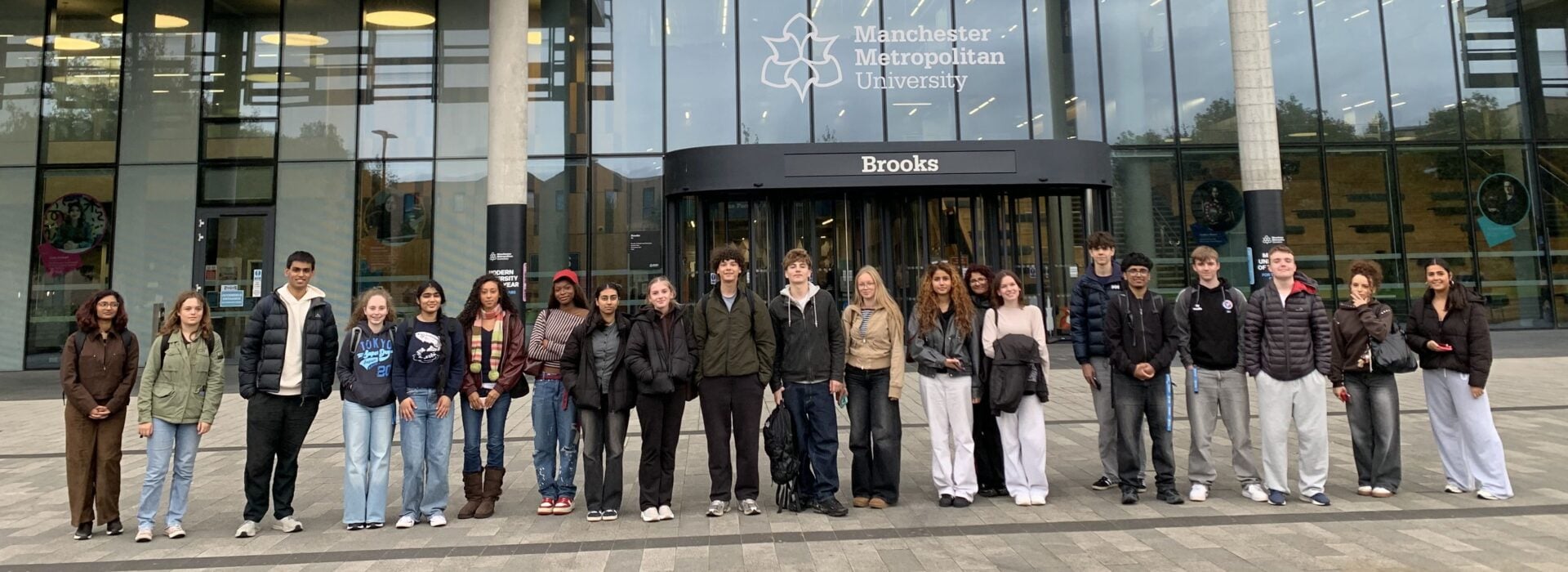
Loreto College’s Upper and Lower Sixth Geography students joined Mr Parkin and Mr Wilkinson for a Higher Education talk at Manchester Metropolitan University. The talk focused on wildfires, one of the world’s hottest and increasingly prevalent hazards, which also affects the UK and Manchester.
The university-style talk was delivered by the University of Manchester’s Professor Gareth Clay, who introduced students to crucial natural and human drivers of fires in nature, contrasted the environmental positives and socioeconomic negatives of UK-specific fire events (e.g., Saddleworth Moor 2018, Cairngorms 2026), and provided students with up-to-date facts which they can use in their lessons, exam answers and day-to-day life. Professor Clay presented the topic of wildfires from an interdisciplinary perspective, capturing the attention of not just students interested in Geography and Environmental Science careers, but also those applying the lens through Sociology, Biology, Engineering and more.
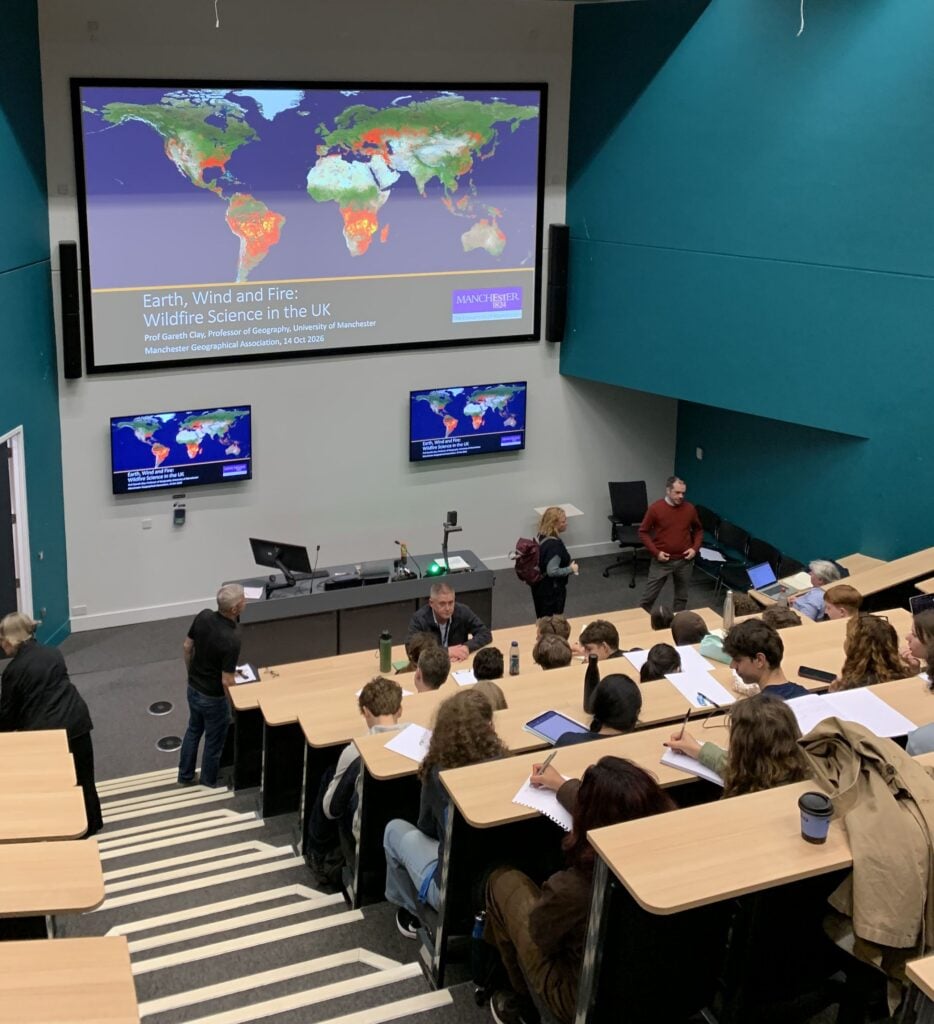
Despite the ironic timing of a fire alarm during the talk on fire and preparedness, students enjoyed experiencing what undergraduate lectures may entail, as well as the opportunity to ask Professor Clay questions about his research and hopes for wildfire science across the UK. One student reflected, “It’s shocking that 32,000 outdoor vegetation fires burn in England each year, and Bank and School Holidays seem to be driving these rates to increase. Everyone should be more responsible for the betterment of anyone”.
The talk relates to the ‘Hazards’ topic that students study in their upper sixth year. By attending this lecture, students are not only better prepared and more aware for their upcoming lessons but also for the predicted increase in the distribution, frequency and magnitude of these events in their lifetime.